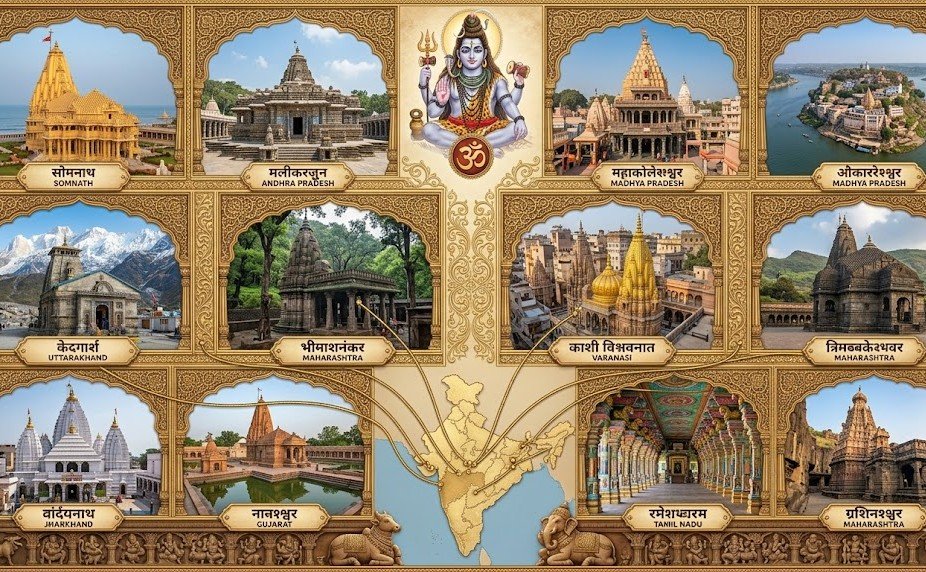
India is the land of Lord Shiva, and from the snow-capped peaks of the Himalayas to the roaring shores of the southern coastline, his presence is felt everywhere. Whether you are a deeply devoted pilgrim or simply a traveller seeking the raw spiritual energy that ancient temples carry, visiting a Shiv temple in India is an experience that stays with you long after you have returned home. These are not just places of worship — they are living monuments of faith, architecture, and centuries of unbroken tradition. Here is a guide to the most iconic Shiv temples across India where you can go and feel that divine connection for yourself.
Kedarnath Temple, Uttarakhand
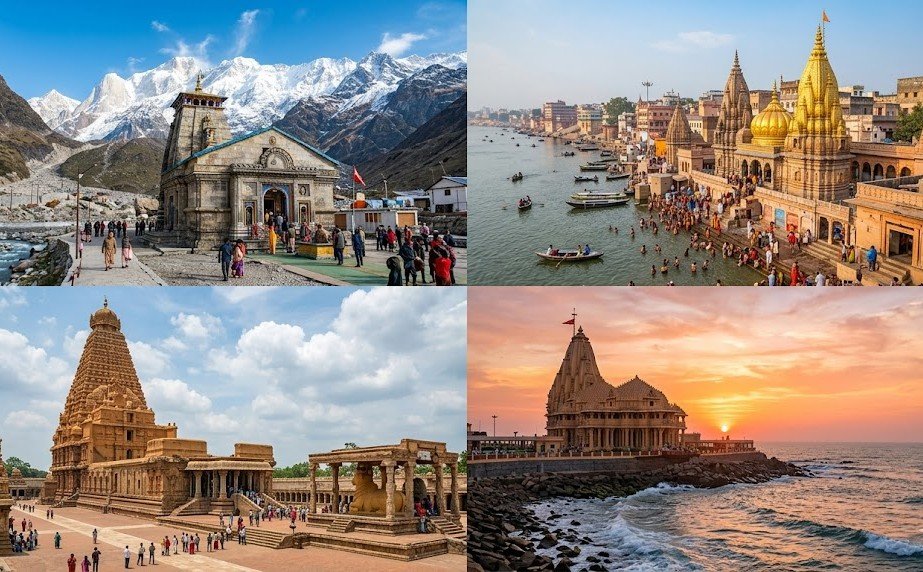
Nestled at an altitude of 3,583 metres in the Garhwal Himalayas, Kedarnath is one of the twelve Jyotirlingas and arguably the most dramatic of all Shiv temples. The trek from Gaurikund to Kedarnath — roughly 16 kilometres through misty mountain trails, waterfalls, and alpine meadows — is a pilgrimage in itself. The stone temple, believed to have been built by the Pandavas and later restored by Adi Shankaracharya in the 8th century, sits against the backdrop of the massive Kedarnath peak. After the devastating 2013 floods that destroyed nearly everything around it, the temple stood untouched, which only deepened the faith of millions.
The temple is open from late April to early November, and the best time to visit is May-June or September-October when the weather is clear and the crowds are manageable. Helicopter services from Phata, Guptkashi, and Sirsi are available if the trek feels too demanding.
Pro Tip: Book your helicopter tickets well in advance during peak season. If you are trekking, start early in the morning to avoid afternoon rain and fatigue. Carry warm layers — temperatures drop sharply after sunset, even in summer.
Kashi Vishwanath Temple, Varanasi, Uttar Pradesh
Varanasi is the spiritual capital of India, and the Kashi Vishwanath Temple is its beating heart. Dedicated to Lord Shiva as Vishwanath — the Lord of the Universe — this temple is one of the most sacred Jyotirlingas. The original temple has been destroyed and rebuilt multiple times across history, and the current structure dates back to 1780, built by Maharani Ahilyabai Holkar of Indore. The recently completed Kashi Vishwanath Corridor has transformed the entire precinct, connecting the temple directly to the ghats of the Ganga with wide walkways, gardens, and restored heritage buildings.
The energy here is unlike anything else. The narrow lanes of Varanasi leading to the temple are chaotic, fragrant with incense and marigolds, and alive with chanting. Attending the evening Ganga Aarti at Dashashwamedh Ghat after your temple visit completes the experience beautifully.
Pro Tip: Visit during the early morning Mangla Aarti (around 3 AM) for the most intimate and crowd-free darshan. The Kashi Vishwanath Corridor now has a well-organized entry system — carry a valid photo ID and avoid carrying phones or bags inside.
Somnath Temple, Gujarat
Standing proudly on the western coast of Gujarat in Veraval, the Somnath Temple is the first among the twelve Jyotirlingas. This temple has been destroyed and rebuilt at least six times — by invaders ranging from Mahmud of Ghazni to Alauddin Khilji — and every time, it rose again. The present temple, reconstructed in 1951 under the initiative of Sardar Vallabhbhai Patel, is a masterpiece of Chalukya-style architecture in gleaming white stone. The fact that there is no landmass between Somnath and the South Pole across the Arabian Sea is inscribed on a pillar within the temple — a detail that quietly speaks to the temple's ancient maritime significance.
The evening sound and light show at the temple narrates the story of Somnath's resilience and is absolutely worth attending.
Pro Tip: Combine your Somnath visit with a trip to nearby Gir National Park (about 65 km away) for Asiatic lion sightings, or visit the ancient port town of Dholavira if you enjoy archaeological history.
Mahakaleshwar Temple, Ujjain, Madhya Pradesh
Ujjain is one of the seven Moksha-giving cities in Hinduism, and the Mahakaleshwar Temple — home to one of the twelve Jyotirlingas — is its crown jewel. What makes Mahakaleshwar unique is its Dakshinamukhi (south-facing) Shivling, a feature considered exceptionally rare and powerful in tantric traditions. The Bhasma Aarti, performed every morning at 4 AM, is the temple's most famous ritual. During this ceremony, the Shivling is adorned with ash from freshly cremated bodies, accompanied by powerful Vedic chanting in a dimly lit sanctum. It is intense, deeply spiritual, and not for the faint-hearted.
The temple sits near the banks of the Shipra River, and the entire old city of Ujjain has a timeless quality that makes you feel like you have stepped back several centuries.
Pro Tip: Bhasma Aarti requires prior online registration on the temple's official website. Slots fill up fast, especially during Shravan month and Mahashivratri. Register at least a week in advance.
Rameshwaram Temple (Ramanathaswamy Temple), Tamil Nadu
Located on Pamban Island at the southeastern tip of India, the Ramanathaswamy Temple at Rameshwaram is one of the Char Dham pilgrimage sites and holds a Jyotirlinga. Legend says Lord Rama himself installed the Shivling here to atone for the sin of killing Ravana, a Brahmin, during the war in Lanka. The temple is famous for its magnificent corridors — the longest among any Hindu temple in India — with intricately carved granite pillars stretching endlessly in every direction.
The ritual of bathing in the 22 sacred wells (theerthams) within the temple complex before entering the sanctum is unique to Rameshwaram. Each well is believed to cure specific ailments and wash away particular sins. The water temperature and taste differ noticeably from well to well, which is something visitors find genuinely surprising.
Pro Tip: The Pamban Bridge connecting Rameshwaram to the mainland is an engineering marvel and a stunning visual experience, especially at sunrise. Wear clothes you do not mind getting soaked in — the theertham bathing ritual is thorough.
Bhojpur Temple (Bhojeshwar Temple), Madhya Pradesh
Often called the "Somnath of the East," the Bhojpur Temple near Bhopal houses one of the tallest Shivlings in India, standing at nearly 7.5 feet and carved from a single rock. What makes this temple truly fascinating is that it was never completed. Construction began under Raja Bhoj in the 11th century, and the earthen ramps used to haul massive stone blocks to the top are still visible nearby, offering a rare glimpse into medieval Indian construction techniques. The temple has no boundary walls, no entrance gates, and no ornamental towers — just a massive sanctum with a towering Shivling and a partially finished mandapa.
It is a photographer's dream and a historian's paradise, sitting quietly on a hill overlooking the Betwa River.
Pro Tip: Visit during Mahashivratri when a massive fair is held here and the temple comes alive with thousands of devotees. The rest of the year, it is peacefully uncrowded — perfect for quiet exploration.
Mallikarjuna Swamy Temple, Srisailam, Andhra Pradesh
Perched atop the Nallamala Hills in the dense forests of Andhra Pradesh, Srisailam is home to the Mallikarjuna Swamy Temple — one of the twelve Jyotirlingas and simultaneously one of the eighteen Maha Shakti Peethas, making it doubly sacred. The temple's remote forested setting gives it a mystical quality that more accessible temples simply cannot match. The surrounding Nallamala forest is part of a tiger reserve, and the drive through the Eastern Ghats to reach Srisailam is spectacularly scenic with deep gorges, winding roads, and the Krishna River flowing far below.
The Srisailam Dam and the Patala Ganga (a spot by the river at the base of the hill, reached by a cable car) are worth visiting alongside the temple.
Pro Tip: If you are visiting from Hyderabad, the drive takes about 4-5 hours. The night-time illumination of the dam and temple is beautiful. Accommodation options near the temple are limited, so book APSRTC guest houses or temple trust rooms in advance.
Tungnath Temple, Uttarakhand
Tungnath is the highest Shiv temple in the world at 3,680 metres and is part of the Panch Kedar pilgrimage circuit. The 3.5-kilometre trek from Chopta to Tungnath is one of the most beautiful short treks in India, passing through dense rhododendron forests that explode in red and pink blooms during April and May. The small stone temple at the top is over a thousand years old and radiates a quiet, contemplative energy that feels utterly removed from the modern world. From Tungnath, you can continue another 1.5 kilometres uphill to Chandrashila peak for a jaw-dropping 360-degree panorama of Himalayan giants like Nanda Devi, Chaukhamba, and Kedarnath.
Pro Tip: Chopta is the base for this trek and has limited but decent accommodation. The trek is easy enough for beginners but can get slippery in the monsoon. Carry a rain jacket and trekking poles during July-September.
Brihadeeswara Temple, Thanjavur, Tamil Nadu
The Brihadeeswara Temple in Thanjavur, built by the great Chola emperor Raja Raja I in 1010 AD, is not just a Shiv temple — it is a UNESCO World Heritage Site and one of the greatest architectural achievements in Indian history. The temple's vimana (tower) rises to 66 metres, making it one of the tallest in the world, and the crowning stone at the top — a single granite block weighing approximately 80 tonnes — was hauled to that height using an inclined plane stretching several kilometres. The massive Nandi statue at the entrance, carved from a single rock, and the exquisite Chola-era frescoes inside the circumambulatory passage are unforgettable.
This is a temple where architecture speaks as loudly as devotion. Even if you are not particularly religious, the sheer engineering genius on display here will leave you speechless.
Pro Tip: Hire a local guide at the entrance — the temple's architectural details, astronomical alignments, and hidden inscriptions are easy to miss without one. The temple is beautifully lit in the evening.
Amarnath Cave Temple, Jammu & Kashmir
The Amarnath Cave, at an altitude of 3,888 metres in the Kashmir Himalayas, houses a naturally formed ice Shivling that waxes and wanes with the lunar cycle. The annual Amarnath Yatra, typically held between July and August, draws lakhs of pilgrims who trek through some of the most rugged and beautiful terrain in India. There are two routes — the traditional 36-kilometre Pahalgam route and the shorter but steeper 14-kilometre Baltal route. The sight of the ice lingam glowing inside the dark cave, surrounded by dripping stalactites and the smell of cold mountain rock, is one of those rare moments that words cannot fully capture.
The yatra is managed by the Shri Amarnathji Shrine Board (SASB), and registration is mandatory.
Pro Tip: Get a mandatory health certificate from an authorized medical facility before registering for the yatra. Physical fitness matters — start walking and cardio training at least a month before. Carry waterproof gear, and be mentally prepared for unpredictable weather, including snow in July.
Lingaraj Temple, Bhubaneswar, Odisha
The Lingaraj Temple is the largest and most important temple in Bhubaneswar, the "City of Temples," and a stunning example of Kalinga architecture. Built in the 11th century, the temple's 55-metre-tall deul (tower) dominates the city skyline. The temple is dedicated to Harihara — a combined form of Shiva and Vishnu — reflecting Odisha's unique syncretic tradition. The temple complex contains over 100 smaller shrines clustered around the main structure, and the Bindu Sagar lake nearby is considered sacred.
Non-Hindus are not permitted inside the temple, but there is a viewing platform outside the compound wall (originally built for Lord Curzon's visit) that offers a decent view of the temple's exterior.
Pro Tip: Combine your Lingaraj visit with the Mukteshwar Temple and Rajarani Temple, both nearby and architecturally spectacular with far fewer crowds. Bhubaneswar also makes an excellent base for day trips to Puri and Konark.
Planning Your Shiv Temple Pilgrimage
Visiting these temples is as much about the journey as the destination. Some are easy urban visits — hop off a train in Varanasi or Ujjain and you are there within minutes. Others, like Kedarnath, Amarnath, and Tungnath, demand physical effort and advance planning. The beauty of a Shiv temple pilgrimage across India is the sheer diversity of landscapes, cultures, and architectural styles you encounter along the way. You might start at the freezing heights of the Himalayas and end at the warm, salt-sprayed shores of the Indian Ocean.
Whatever your motivation — faith, history, architecture, or the simple thrill of travel — these temples will give you far more than you expect. Har Har Mahadev.
You Might Also Like