Why Goa Is More Than Just a Beach Holiday
Every year over 8 million tourists visit Goa — India's smallest state and its most cosmopolitan. Most of them stick to the same 10 km stretch of North Goa beaches, eat at the same shacks, and leave thinking they've seen Goa. They haven't.
Beyond the beach parties lies a Goa of 450-year-old Portuguese churches, silent forest waterfalls, spice plantations where you eat lunch under a canopy of trees, hidden Hindu temples carved into jungle hillsides, and fishing villages where time moves at the pace of the tides. This guide covers all of it.
North Goa vs South Goa — Which Is Right for You?
| Feature | North Goa | South Goa |
|---|---|---|
| Vibe | Lively, party-focused, touristy | Quiet, luxurious, laid-back |
| Beaches | Baga, Calangute, Anjuna, Vagator | Palolem, Agonda, Butterfly, Cola |
| Crowd Level | Very busy peak season | Significantly quieter |
| Budget Options | More (hostels, cheap shacks) | Fewer (more mid-range and luxury) |
| Nightlife | Excellent (Tito's, Curlies, Mambo's) | Limited (beachside bonfires) |
| Best For | Groups, backpackers, first-timers | Couples, families, repeat visitors |
North Goa Beaches — The Famous Strip
Baga and Calangute
The most crowded beaches in Goa — kilometre-long stretches of golden sand packed with sun loungers, water sports, and shacks. Not for those seeking solitude, but undeniably fun. Baga is slightly more upscale; Calangute is the busiest in all of India during December. Good for: first-timers, groups, water sports (parasailing, banana boat, jet ski).
Anjuna
Anjuna has calmed down since its full-moon rave days but retains its alternative character. The Wednesday flea market is one of Goa's best — Tibetan jewellery, Kashmiri shawls, antique maps, and the best people-watching in the state. Anjuna Beach itself is rocky but dramatic, with cliff-top cafes looking over the Arabian Sea.
Vagator and Chapora
Vagator is split into two coves by a headland. The upper beach is quieter; the lower (Little Vagator) is backed by red laterite cliffs. Above everything looms the Chapora Fort — the Dil Chahta Hai fort, immortalised in Bollywood — with sweeping views from the Mandovi estuary to the Arabian Sea. Sunrise here is extraordinary.
Arambol
The northernmost mainstream beach in Goa and the most alternative. Known for:
- A freshwater lake just behind the beach where parrots gather at sunset
- Drum circles on the beach every evening
- Long-stay travellers who rent houses for months at a time
- The best live music scene outside of the clubs
South Goa Beaches — The Quieter, More Beautiful Side
Palolem
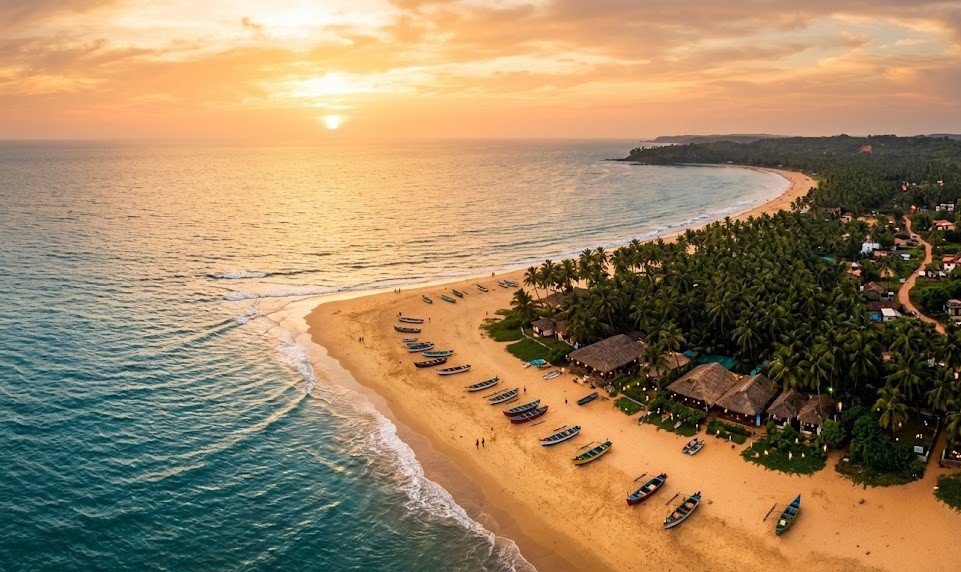
A perfect crescent-shaped bay with calm, swimmable water and rows of wooden huts built right on the beach. South Goa's most popular beach — and rightly so. The bay faces west for spectacular sunsets. Silent discos (headphone parties) on the beach are Palolem's quirky specialty.
Agonda
Quieter than Palolem with a long, wide beach almost entirely to yourself outside peak season. Olive Ridley sea turtles nest here between November and March — the beach is partially restricted during nesting season. The most peaceful beach in Goa for those who genuinely want to decompress.
Cola Beach
One of Goa's best-kept secrets — a small, beautiful beach with a freshwater lagoon separated from the sea by a sandbar. Access is by a steep forest track (4WD recommended or 15-minute walk). Only a handful of beach huts. The lagoon is safe for swimming even when the sea is rough.
Butterfly Beach
Accessible only by boat from Palolem (Rs 600 round trip) or a 45-minute jungle trek. No accommodation, no shacks — just a pristine crescent of white sand tucked in a cove. Dolphins are regularly spotted just offshore. The most beautiful beach in Goa that most tourists never see.
Beyond Beaches — The Real Goa
Old Goa — The Rome of the Orient
Just 10 km from Panaji, Old Goa is a UNESCO World Heritage Site with the greatest concentration of Portuguese colonial churches in Asia. The Basilica of Bom Jesus holds the preserved body of St. Francis Xavier, Goa's patron saint. The Se Cathedral is the largest church in Asia. Walking between the white-washed basilicas in the late afternoon light feels like being transported to 16th-century Lisbon.
Panaji (Panjim) — Goa's Beautiful Capital
More travellers should spend time in Panaji. The Fontainhas neighbourhood — Latin Quarter — is a warren of narrow streets lined with Portuguese houses painted in yellow, blue, and terracotta, with name plates in Portuguese, window balconies dripping with bougainvillea, and bakeries selling bebinca (layered Goan coconut cake). One of India's most beautiful neighbourhoods.
Spice Plantations
The spice farms of the Goan interior offer a half-day experience unlike any other. Tropical Spice Plantation and Savoi Plantation take visitors on guided walks through groves of cardamom, black pepper, turmeric, vanilla, and cinnamon. The tour ends with a traditional Goan lunch — fish curry rice, prawn rechado, bebinca — served under a canopy of mango trees.
Cost: Rs 600–800 per person including lunch. Location: Ponda, 28 km from Panaji.
Dudhsagar Falls
One of India's tallest waterfalls at 310 metres — the name means "sea of milk" for the white froth of the cascading water. Located inside Bhagwan Mahaveer Wildlife Sanctuary, accessible by jeep safari from Mollem or a scenic train ride on the Konkan Railway (the train crosses the bridge above the falls — one of the great train experiences in India).
Best season: October to February (post-monsoon water levels). Jeep safari: Rs 700–900 per person.
Divar Island
Cross the Mandovi River by free ferry from Old Goa to reach Divar Island — a hidden gem of paddy fields, ancient Hindu temples, colonial mansions with overgrown gardens, and silence broken only by birdsong. Rent a bicycle on the island and spend a morning drifting between the Piedade Church and the Saptakoteshwar Temple. Almost no other tourists.
Goa Food Guide — What to Eat and Where
Must-Eat Goan Dishes
- Fish curry rice: The soul of Goan cuisine. Coconut-based curry with freshly caught kingfish or pomfret, eaten with red Goan rice. Available at any local restaurant for Rs 120–180.
- Prawn balchao: Prawns in a fiery, tangy pickle-like sauce made with vinegar, dried chillies, and spices. Hot, complex, and deeply Goan.
- Pork vindaloo: The original — not the British Indian version. Pork slow-cooked in Goan red chilli paste with vinegar. Served with pao (Goan bread rolls).
- Bebinca: The queen of Goan desserts. Seven to sixteen layers of coconut milk, egg yolk, sugar, and flour, each layer individually baked. Buy from Confeitaria 31 de Janeiro in Panaji.
- Feni: Goa's iconic spirit. Cashew feni (from cashew apple) and coconut feni are both GI-tagged. Try feni mixed with lime soda at any local bar for Rs 60–80.
Best Eating Spots
| Place | Location | Known For |
|---|---|---|
| Ritz Classic | Panaji | Best prawn curry and rechado in Goa |
| Vinayak | Panaji | Authentic Goan thali, Rs 150 |
| Brittos | Baga | Legendary beach shack, seafood and cocktails |
| Martin's Corner | Betalbatim (South) | Celebrity-favourite, pork sorpotel |
| Zeebop | Utorda (South) | Beachfront, best lobster in South Goa |
| Local toddy shops (tascas) | Any village | Feni, prawn rissois, Rs 50 a drink |
How to Get Around Goa
- Scooter rental: Rs 300–400 per day. The best way. No traffic jams, park anywhere, reach any beach. International licence not required for scooters under 50cc.
- Bike rental (100cc+): Rs 400–700 per day. Better for longer distances like North to South Goa day trips.
- Auto rickshaw: Rs 100–300 per ride. Metered but most drivers negotiate. Use for short trips.
- Rapido/Ola: Available in Panaji and North Goa. More reliable metering than autos.
- Konkan Railway: Trains connect Margao (South Goa) with Madgaon, Vasco, and Old Goa. The scenic Dudhsagar train route is a highlight in itself.
How to Reach Goa
| Mode | From | Duration | Approx Cost |
|---|---|---|---|
| Flight | Mumbai | 1 hr | Rs 2,500–8,000 |
| Flight | Delhi | 2.5 hrs | Rs 4,000–12,000 |
| Train | Mumbai (Konkan Rail) | 9–11 hrs | Rs 500–2,500 |
| Train | Bengaluru | 9–12 hrs | Rs 400–2,000 |
| Bus | Mumbai | 12–14 hrs | Rs 800–1,500 |
| Bus | Pune | 10–12 hrs | Rs 600–1,200 |
Best Time to Visit Goa
- November to February (Peak): Perfect weather, all beach shacks open, best sea conditions. Prices highest. Book accommodation 6–8 weeks ahead for Christmas–New Year.
- March to May (Shoulder): Hot but fewer crowds. Great deals on hotels. Carnival happens in February–March — a must if you're visiting in that window.
- June to September (Monsoon): Heavy rain, rough seas, most shacks closed. But South Goa's waterfalls (Dudhsagar) are at peak beauty, and Goa in the rain has its own moody charm. 50–70% cheaper accommodation.
Budget Breakdown — 7 Days in Goa
| Expense | Budget (Rs) | Mid-Range (Rs) |
|---|---|---|
| Flights (round trip) | 4,000–8,000 | 10,000–20,000 |
| Accommodation (per night) | 500–1,000 | 2,500–6,000 |
| Scooter rental (per day) | 300–400 | 400–600 |
| Food (per day) | 300–600 | 800–2,000 |
| Activities (water sports, spice farm, Dudhsagar) | 2,000–3,500 | 5,000–8,000 |
| Total 7-day trip (per person) | Rs 12,000–20,000 | Rs 30,000–55,000 |
Frequently Asked Questions
Is Goa safe for solo female travellers?
Yes, with standard precautions. Stick to populated beaches after dark, avoid isolated stretches at night, and trust your instincts. South Goa (Agonda, Palolem) is particularly safe and popular with solo female travellers. The backpacker hostels in North Goa (Panaji, Mapusa area) have strong communities.
How many days are enough for Goa?
Three days covers the essentials. Five days lets you see both North and South Goa properly. Seven days or more is ideal if you want to explore Old Goa, spice farms, interior villages, and actually slow down — which is the whole point of Goa.
Is Goa expensive?
It depends entirely on how you travel. Budget travellers can manage on Rs 1,500–2,000 per day. The same trip in a beach resort with restaurant meals and water sports costs Rs 8,000–15,000 per day. Goa works for every budget — the key is accommodation choice.
What is the best beach in Goa?
For scenery: Butterfly Beach or Cola Beach (South). For atmosphere: Baga or Vagator (North). For families: Palolem. For solitude: Agonda. There is no single "best" — the right beach depends on what you're looking for.
Conclusion
Goa rewards the traveller who slows down and looks past the beach lounger. It has everything — history in the cathedrals of Old Goa, wilderness in the Western Ghats spilling into its eastern border, a food culture that is genuinely unique in India, and a coast that somehow manages to have one of Asia's most famous beaches and a dozen completely deserted coves within 50 km of each other.
Have questions about Goa before you book — which area to stay, which beaches to skip, what to eat on a vegetarian diet, or how to combine Goa with another destination? Ask on AskYatri.com and get honest answers from people who know Goa well.
You Might Also Like