Everyone knows Rishikesh. Laxman Jhula, river rafting, Ganga Aarti, Beatles Ashram — these are on every traveler's list. And rightly so. But if you've already done the popular spots, or if you want to experience a side of Rishikesh that 99% of visitors never see — this guide is for you.
Rishikesh is far larger and far more layered than most people realise. Beyond the busy ghats and adventure camps, there are ancient temples hidden in jungle, secret waterfalls, forgotten meditation caves, viewpoints with zero crowds, and food experiences that only locals know about.
Here are 5 hidden gems in Rishikesh that most tourists walk straight past — and why each one is worth going out of your way for.
1. Kunjapuri Devi Temple — Rishikesh's Most Spectacular Sunrise Viewpoint
Distance from Rishikesh: ~25 km | Type: Temple + Panoramic Viewpoint | Entry: Free
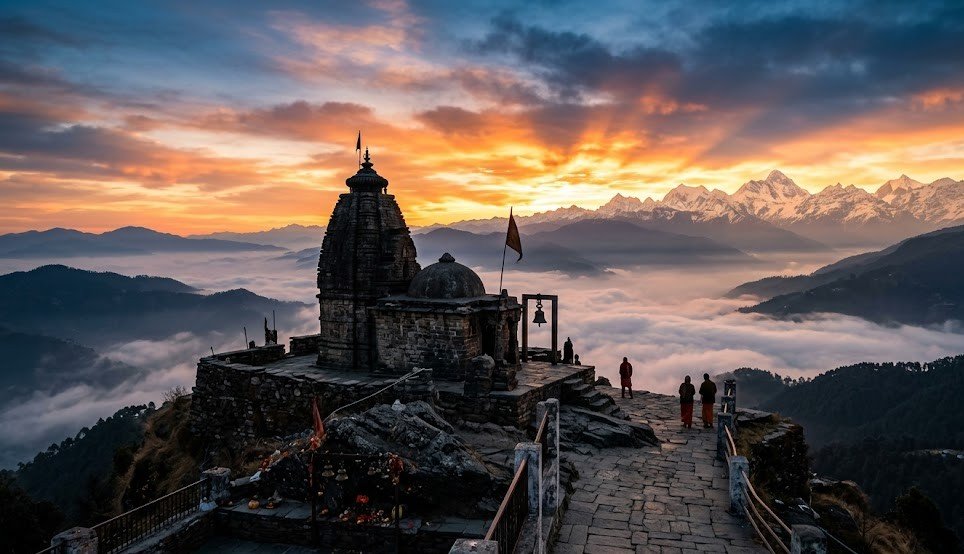
While thousands of tourists crowd the ghats every morning, a handful of early risers make the drive to Kunjapuri Devi Temple — and witness one of the most breathtaking sunrises in all of Uttarakhand. Perched at 1,676 metres above sea level in the Shivalik range, this ancient Shakti temple offers a 360° panoramic view of three mountain ranges simultaneously — the Garhwal Himalayas, Bandarpunch, and Kedarnath peaks — all lit up in golden sunrise light.
Kunjapuri is one of the Siddha Peeth — 108 sacred shakti shrines in India. The temple is small and ancient, the priests are welcoming, and the atmosphere at dawn when mist rolls across the valley below is genuinely otherworldly. On clear winter mornings (November to February), the snow-capped Himalayan peaks are visible in stunning clarity.
Why Most Tourists Miss It
The sunrise requires leaving Rishikesh by 4:30–5:00 AM. Most travelers either don't know about it or can't motivate themselves to wake up that early. Their loss is completely your gain.
How to Reach
- Hire a cab from Rishikesh (~₹600–800 round trip) — specify you want to reach before sunrise
- The last 1.5 km from the road involves a steep uphill walk of about 20–25 minutes
- Carry a torch — the path is unlit before dawn
Best Time to Visit
October to March for crystal clear Himalayan views. Arrive at least 30 minutes before sunrise — the changing colours of the sky begin long before the sun actually appears.
Pro Tip: Combine with a visit to Narender Nagar town on the way back — a quiet Tehri Garhwal hill town with a stunning Ananda Spa resort and a small local market worth exploring.
2. Vashishtha Gufa — The Meditation Cave of a Living Saint
Distance from Rishikesh: ~12 km upstream | Type: Ancient Cave Temple + Meditation | Entry: Free
Most visitors to Rishikesh know about the ashrams along the Ganga. Very few know about Vashishtha Gufa — an ancient meditation cave on the banks of the Ganga, approximately 12 km upstream from Rishikesh on the Badrinath highway. This is where the sage Vashishtha — guru of Lord Rama — is said to have meditated. The cave itself is dark, cool, and deeply atmospheric, with a small Shiva lingam inside.
But what makes Vashishtha Gufa truly extraordinary is its recent history. The great Advaita Vedanta master Swami Purushottamananda lived and meditated in this cave for decades. The ashram attached to the cave maintains his legacy and welcomes sincere visitors for meditation in complete silence.
Sitting inside the cave beside the flowing Ganga — in total darkness except for a single oil lamp — is one of the most profoundly peaceful experiences available in Rishikesh. No crowds. No noise. Just the sound of the river and the cool cave air.
Why Most Tourists Miss It
It requires travelling 12 km upstream on the Badrinath road — most tourists never venture this far from the main town. No tour operator includes it in standard packages.
How to Reach
- Auto or cab from Rishikesh along the Badrinath highway (~₹200–300 one way)
- The cave is clearly marked on Google Maps as "Vashistha Gufa"
- Open from approximately 6 AM to 12 PM and 3 PM to 6 PM — timings vary
Visitor Guidelines
- Maintain complete silence inside and around the cave
- Dress modestly — no shorts or sleeveless clothing
- Photography inside the cave is not permitted
- Small donations to the ashram are welcomed
Pro Tip: Visit on a weekday morning — even this hidden gem gets a small trickle of visitors on weekends. A Tuesday or Wednesday morning visit gives you the cave almost entirely to yourself.
3. Neer Garh Waterfall — Rishikesh's Secret Jungle Waterfall
Distance from Rishikesh: ~5 km | Type: Waterfall + Nature Trek | Entry: ~₹50
Rishikesh sits at the base of forested Himalayan foothills — and those forests hide several waterfalls that almost no tourist ever finds. Neer Garh Waterfall is the most accessible of these — a beautiful multi-tiered waterfall hidden in dense jungle just 5 km from Laxman Jhula.
The trek to Neer Garh is itself the experience — a 45-minute walk through thick forest with the sound of the stream getting louder as you climb. The trail passes through trees draped in moss, crosses small wooden bridges, and gradually reveals the waterfall in stages — each tier more impressive than the last. The final pool at the base of the main fall is perfect for a swim on a hot day.
What makes Neer Garh special is how genuinely wild and untouched the forest feels — a complete contrast to the busy ashram town just a few kilometres below. You are very likely to spot langur monkeys, peacocks, and a variety of Himalayan birds along the trail.
Why Most Tourists Miss It
Most visitors to Rishikesh never walk more than 10 minutes from the main ghat area. Neer Garh requires a 45-minute uphill forest walk — which filters out the casual crowd completely.
How to Reach
- Walk or take an auto from Laxman Jhula towards Badrinath road
- The trailhead starts near Neer Garh village — well marked with signs
- Trek takes approximately 40–50 minutes one way
- Wear proper shoes — the trail is rocky and can be slippery
Best Time to Visit
October to June. Avoid monsoon season (July–August) — the trail becomes dangerously slippery and flash floods are possible. The waterfall is at its most powerful in September–October just after monsoon ends.
Pro Tip: Start early — by 7–8 AM. The forest is cool, the light is beautiful, and you will have the waterfall entirely to yourself before the small trickle of visitors arrives around 10–11 AM. Carry snacks and water.
4. Gita Bhavan Library and Ancient Temple Complex — A Spiritual Hidden World
Distance from Rishikesh: In Swarg Ashram area | Type: Temple Complex + Library | Entry: Free
Most visitors to Rishikesh walk past the Gita Bhavan complex in Swarg Ashram without realising what lies inside. From the outside it looks like just another ashram building. Step through the gates and you enter a completely different world — a vast, beautifully maintained complex with painted halls depicting scenes from the Mahabharata and Ramayana, dozens of shrines, a massive free library of Sanskrit and Hindu philosophy texts, and one of the most peaceful courtyards in Rishikesh.
The complex was established in 1950 and has been maintained in immaculate condition. The painted murals covering every wall of the prayer halls are extraordinary — detailed, vivid scenes from Hindu epics that function as a visual storytelling tradition stretching back thousands of years. The free reading room and library houses thousands of books on Vedanta, yoga, and Indian philosophy — all available to visitors without charge.
The complex also runs a free langar (community kitchen) that serves simple, wholesome meals to anyone who comes — a beautiful expression of Indian spiritual hospitality.
Why Most Tourists Miss It
It has no adventure activity, no famous name, and no entry fee — so no touts promote it. Most travelers walk straight past on their way to the river ghats. It is the most peaceful place in Rishikesh precisely because nobody knows to look for it.
How to Reach
- Located in Swarg Ashram area, just south of Ram Jhula bridge on the east bank
- 5-minute walk from Ram Jhula — look for the large painted entrance gate
- Open all day from approximately 5 AM to 9 PM
Pro Tip: Visit during the evening prayer time (around 6–7 PM) — the complex comes alive with chanting, incense, and oil lamps that create an atmosphere completely unlike the busy ghat areas nearby.
5. Phool Chatti Ashram — The Ganga's Most Peaceful Hidden Retreat
Distance from Rishikesh: ~14 km upstream | Type: Hidden Ashram + Natural Pool | Entry: Free (donations welcome)
If you want to experience the Ganga in its most raw, powerful, and peaceful form — away from the crowds, the tourists, and the noise of the main town — Phool Chatti Ashram is the answer. Located 14 km upstream from Rishikesh on the Badrinath highway, Phool Chatti sits directly on a dramatic bend of the Ganga where the river rushes through a narrow gorge.
The ashram itself is small and simple — a few meditation halls, basic accommodation, and a dedicated community of practitioners. But what draws people here is the natural Ganga pool formed by the river's bend — a relatively calm, swimmable stretch of the river sheltered from the main current, with the most extraordinary emerald-green water you will see anywhere in Uttarakhand.
Swimming in the Ganga at Phool Chatti — surrounded by forested cliffs, with the sound of the rapids echoing around the gorge and the Himalayas visible upstream — is genuinely one of the most extraordinary natural experiences in Rishikesh. Almost no tourists know it exists.
Why Most Tourists Miss It
Like Vashishtha Gufa, it requires travelling upstream from the main town. There is no signage, no tour packages, and no promotion. The only people who know about Phool Chatti are returning visitors, long-term yoga practitioners, and locals.
How to Reach
- Auto or cab from Rishikesh along Badrinath highway (~₹250–350 one way)
- Search "Phool Chatti Ashram" on Google Maps — clearly marked
- A short steep path leads down from the road to the ashram and the river
Swimming Safety
- Only swim in the designated calm pool area — the main river current is extremely powerful
- Never swim alone — always go with at least one other person
- Avoid during and immediately after monsoon — water levels can rise rapidly
- Best swimming: October to June
Pro Tip: Combine Phool Chatti and Vashishtha Gufa in a single upstream day trip — both are on the same Badrinath highway road and just 2 km apart. Pack a picnic lunch and spend the full day upstream away from the crowds.
Quick Summary — 5 Hidden Gems in Rishikesh
| # | Hidden Gem | Distance | Best For | Entry |
|---|---|---|---|---|
| 1 | Kunjapuri Devi Temple | ~25 km | Sunrise + Himalaya Views | Free |
| 2 | Vashishtha Gufa | ~12 km | Meditation + Spiritual | Free |
| 3 | Neer Garh Waterfall | ~5 km | Nature Trek + Swimming | ₹50 |
| 4 | Gita Bhavan Complex | Swarg Ashram | Temple Art + Library | Free |
| 5 | Phool Chatti Ashram | ~14 km | Ganga Swimming + Peace | Free |
How to Plan Your Hidden Gems Day in Rishikesh
You can comfortably cover all 5 hidden gems in 2 days:
Day 1 — Upstream Rishikesh
- 4:30 AM: Cab to Kunjapuri Devi Temple for sunrise
- 8:00 AM: Return and breakfast in Rishikesh
- 10:00 AM: Head upstream — Vashishtha Gufa for meditation
- 12:00 PM: Continue to Phool Chatti Ashram for Ganga swimming and lunch
- 4:00 PM: Return to Rishikesh
- 6:00 PM: Evening prayers at Gita Bhavan complex
Day 2 — Jungle and Waterfall
- 7:00 AM: Early start — trek to Neer Garh Waterfall
- 9:00 AM: Swim at the waterfall base pool
- 11:00 AM: Return to Rishikesh for late breakfast
- Afternoon: Free time for yoga, cafés, or Ganga Aarti
Frequently Asked Questions
What are the most hidden places in Rishikesh that tourists don't know about?
Kunjapuri Devi Temple for sunrise views, Vashishtha Gufa for meditation, Neer Garh Waterfall for jungle trekking, Gita Bhavan for ancient temple art, and Phool Chatti Ashram for a secret Ganga swimming spot are the top hidden gems that most tourists in Rishikesh never discover.
Is Neer Garh Waterfall safe to visit?
Yes — during October to June the trail and waterfall are safe and enjoyable. Avoid during monsoon (July–August) as the trail becomes very slippery and there is a risk of flash flooding. Always wear proper trekking shoes and carry water.
Can I swim in the Ganga at Rishikesh?
Swimming in the main Ganga current at Rishikesh is extremely dangerous due to powerful underwater currents. However, the natural pool at Phool Chatti Ashram (~14 km upstream) offers a relatively calm and safe swimming area in the Ganga. Always swim with others and avoid entering the main current.
How early do I need to leave for Kunjapuri sunrise?
Leave Rishikesh by 4:30 AM to reach Kunjapuri before sunrise. The drive takes approximately 45 minutes, and the uphill walk to the temple takes another 20–25 minutes. Check the exact sunrise time for your visit date and plan to arrive at least 20 minutes before that.
Are these hidden gems suitable for first-time visitors to Rishikesh?
Absolutely. Gita Bhavan and Vashishtha Gufa require no physical effort. Neer Garh Waterfall is an easy to moderate trek suitable for most fitness levels. Kunjapuri requires an early start and a short steep walk but no special equipment. Phool Chatti requires a short downhill walk from the road.
Final Thought
Rishikesh is one of India's most extraordinary towns — and most visitors only scratch the surface. The hidden gems in this guide won't show up in travel agency brochures or standard tour packages. They are found by people who walk a little further, wake up a little earlier, and look a little beyond the obvious.
That is exactly the kind of traveler Rishikesh rewards most generously.
Have specific questions about reaching any of these spots — which cab to take, what to expect, current conditions? Ask the AskYatri Rishikesh community — real travelers and locals give honest, specific answers.
You Might Also Like