What Is Hampi?
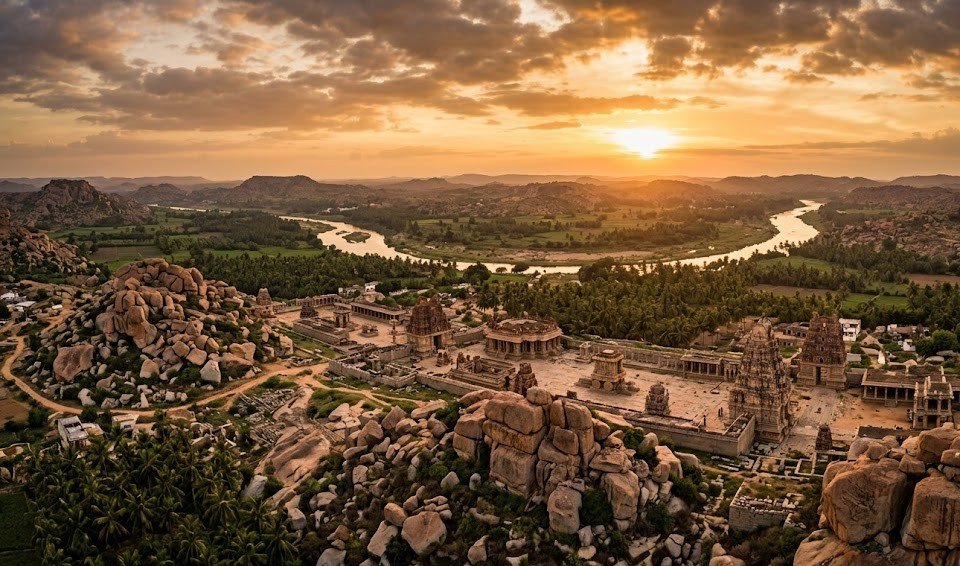
Hampi is a small village in northern Karnataka that sits atop the ruins of Vijayanagara — once the second largest city in the world and the capital of the most powerful Hindu empire of medieval India. At its peak in the 15th century, Vijayanagara had a population of over 500,000, sprawling palaces, 1,600 temples, and a diamond market that Persian traders described as more prosperous than Rome.
In 1565, the city was sacked and burned by the Deccan Sultanates and never rebuilt. Today, the ruins of that empire cover 41 square kilometres of the Tungabhadra river valley — boulders the size of houses balanced on top of each other, temple towers emerging from banana plantations, and stone chariots frozen mid-procession.
Hampi is a UNESCO World Heritage Site since 1986 and one of the most extraordinary archaeological sites in Asia.
Top Places to See in Hampi
1. Virupaksha Temple
The heart of Hampi — this living, functioning temple dedicated to Lord Shiva has been in continuous worship for over 700 years. The 50-metre gopuram (tower) at the entrance is the first thing you see as you arrive at Hampi Bazaar. The temple elephant Lakshmi blesses devotees every morning. Entry is free; camera fee applies.
2. Vittala Temple and Stone Chariot
Hampi's most celebrated monument and the finest example of Vijayanagara architecture. The complex features:
- Musical pillars — 56 pillars that produce musical notes when tapped (now protected, tapping not allowed)
- Stone Chariot — a perfectly carved granite chariot with stone wheels that once rotated. Now a symbol of Karnataka and featured on the Rs 50 note.
- Mahamandapa — the grand pillared hall with intricate carvings of musicians, dancers, and mythological scenes
Entry Fee: Rs 40 (Indians), Rs 600 (foreigners). Open 8 AM – 5:30 PM.
3. Matanga Hill
The highest point in Hampi. The 30-minute climb up uneven boulders rewards you with a 360-degree view of the entire Hampi landscape at sunrise — boulders, ruins, the silver thread of the Tungabhadra, and the village waking up below. The best sunrise spot in Hampi. Carry a torch and leave by 5 AM to reach the top before dawn.
4. Hemakuta Hill
A gentle hill covered with small pre-Vijayanagara temples, this is the ideal sunset spot. The view of Virupaksha Temple's gopuram glowing in the last light against a sky turning pink and orange is one of the most beautiful sights in South India.
5. Royal Enclosure
The administrative heart of the Vijayanagara empire. Here you'll find:
- Mahanavami Dibba — a 12-metre stepped platform where the king watched the famous Mahanavami festival (Dasara) celebrations
- Underground Shiva Temple — partially submerged, accessible only in the dry season
- Queen's Bath — an ornate open-air bath with Indo-Islamic arches and a moat, built for royal women
- Stepped Tank (Pushkarini) — a geometric stepped tank in perfect condition
6. Lotus Mahal and Elephant Stables
The Lotus Mahal is a delicate two-storey pavilion blending Hindu and Islamic architectural styles — arched doorways meet a lotus-bud tower. The adjacent Elephant Stables is a grand row of 11 chambers where the royal war elephants were housed. The alternating domed roofs are strikingly beautiful.
7. Sanapur Lake and Coracle Rides
Just across the Tungabhadra from Hampi Bazaar lies the Hippie Island (Virupapur Gaddi) — a relaxed, traveller-friendly village of guesthouses, cafes with hammocks, and fields of paddy and banana. The crossing is made in a coracle — a round, basket-like boat — for Rs 30 per person. One of those simple travel pleasures that stays with you.
8. Daroji Bear Sanctuary
Located 15 km from Hampi, this sanctuary is home to over 120 Indian sloth bears — the highest density in the world. An observation platform lets you watch them feed on the termite mounds in the late afternoon. One of India's most accessible wildlife experiences.
Hampi Bazaar: The Ancient Market Street
The colonnaded street leading to Virupaksha Temple is the original bazaar of Vijayanagara. In its heyday, this was one of the world's greatest markets — Persian horses, African elephants, spices, and diamonds were traded here. Today, the stone columns still stand, now flanked by chai stalls, souvenir shops, and backpacker cafes. Walking its length at dusk, when the lights come on and the gopuram looms above, is one of Hampi's essential experiences.
Hampi Itinerary Options
| Duration | What You Can Cover |
|---|---|
| 1 Day | Virupaksha Temple, Vittala Temple, Matanga Hill sunrise, Hemakuta sunset |
| 2 Days | Above + Royal Enclosure, Lotus Mahal, Elephant Stables, coracle to Hippie Island |
| 3 Days | Above + Daroji Bear Sanctuary, Anegundi village, lesser-known temples and boulder trails |
| 4+ Days | Full relaxed exploration, cycling the outer ruins, day trip to Badami or Pattadakal |
How to Get Around Hampi
- Bicycle: The most popular way. Rent for Rs 80–150 per day. Flat terrain on the Hampi Bazaar side; good for covering the Royal Enclosure zone.
- Moped/scooter: Rs 300–400 per day. Best for reaching Vittala Temple and Daroji Sanctuary quickly.
- Auto rickshaw: Rs 400–600 for a half-day tour hitting all major sites. Negotiate before boarding.
- Walking: Hampi Bazaar to Vittala Temple is 3 km. Manageable in cool weather, tiring in summer heat.
How to Reach Hampi
By Train
The nearest railway station is Hospet Junction (13 km from Hampi). Well connected to Bangalore (8 hrs), Hyderabad (9 hrs), and Hubli. Auto rickshaws and buses run between Hospet and Hampi.
By Bus
KSRTC buses run overnight from Bengaluru (8–9 hours, Rs 400–700). Direct buses also from Hyderabad, Hubli, and Goa.
By Air
Nearest airport: Hubli Airport (160 km) or Belgaum (Belagavi) Airport (200 km). Bangalore is the most practical flying gateway (370 km by road).
Where to Stay in Hampi
| Type | Location | Price Range |
|---|---|---|
| Budget guesthouses | Hampi Bazaar | Rs 400–900/night |
| Hippie Island cottages | Virupapur Gaddi | Rs 500–1,500/night |
| Mid-range hotels | Hospet | Rs 1,500–4,000/night |
| Heritage boutique | Hampi surroundings | Rs 5,000–12,000/night |
Note: Accommodation in Hampi Bazaar itself is basic but immersive. For comfort with easier access to ruins, stay in Kamalapura (nearest town to Royal Enclosure) or Hospet.
Best Time to Visit Hampi
- October to February: Ideal. Cool temperatures (18–30°C), clear skies, perfect for walking and cycling the ruins.
- March to May: Very hot (35–42°C). Visit only early morning and evening. Avoid midday completely.
- June to September: Monsoon. The Tungabhadra river floods, Hippie Island access is cut off, and many sites partially submerge. The ruins look dramatic in mist but access is limited.
What to Eat in Hampi
Hampi's food scene is a delightful mix of South Indian staples, Israeli-inspired backpacker cafes, and local Karnataka thali restaurants:
- Mango Tree Restaurant — legendary spot on the riverbank with a massive banyan tree. Try the banana leaf thali and fresh lime soda.
- Laughing Buddha — on Hippie Island. Known for Israeli breakfast, hummus, and massive pancakes. Great hangout for solo travellers.
- Roti and dal at the local tea stalls near Virupaksha Temple — the most authentic and cheapest meal in Hampi (Rs 80–120 for a full breakfast)
- Jolada Roti — jowar flatbread, a Karnataka staple, best eaten with enne (brinjal curry)
Practical Tips for Visiting Hampi
- Start early: The ruins are stunning at dawn and sunset. Avoid the 11 AM–3 PM heat entirely.
- Wear comfortable shoes: You'll be walking on uneven ancient stone. No heels, no sandals with straps.
- Carry water: Shops are sparse in the outer ruins. Always have 1.5 litres on you.
- Hire a guide for depth: Without context, many ruins look like just stones. A certified Archaeological Survey of India guide (Rs 500–800 for half day) transforms the experience.
- Respect the living temples: Virupaksha Temple is actively worshipped. Remove footwear, dress modestly, no photography inside the inner sanctum.
- Check coracle timing: The coracle crossing to Hippie Island stops after dark and sometimes in heavy current. Plan your return before 6 PM.
Frequently Asked Questions
Is Hampi safe for solo female travellers?
Yes, Hampi is generally safe. The backpacker community is large and welcoming. Stick to well-lit areas in the evening, avoid isolated boulder fields after dark, and the Hippie Island side is particularly relaxed and solo-traveller friendly.
How many days do I need in Hampi?
Two full days covers the major sites comfortably. Three days lets you explore at a relaxed pace, take a coracle ride, and do the Daroji bear sanctuary. Four or more days is ideal if you want to cycle the outer ruins and day-trip to Badami.
Is Hampi expensive?
Hampi is one of India's most affordable destinations. A budget traveller can manage Rs 800–1,200 per day (accommodation + food + site entry fees). Even mid-range travel costs under Rs 3,000 per day.
Can I visit Hampi in one day from Bangalore?
Technically possible but not recommended. The journey is 8–9 hours each way by bus or train. You'd see almost nothing. Budget a minimum of two nights — you came this far, the ruins deserve more than a rushed 3-hour visit.
Conclusion
Hampi does something rare — it makes history feel visceral and alive. You don't read about the Vijayanagara empire in Hampi; you walk through it, sit in the shade of its pillars, and watch the sunset paint its stones amber and gold. Few places in India carry this weight of the past so lightly.
If you have questions before your Hampi trip — which guesthouses to trust, how to combine it with Goa or Coorg, or what the Daroji safari is really like — ask the community on AskYatri.com. Real travellers who've been there are waiting to help.
You Might Also Like